
The Move That Moved AI: AlphaGo vs Lee Sedol, 2016
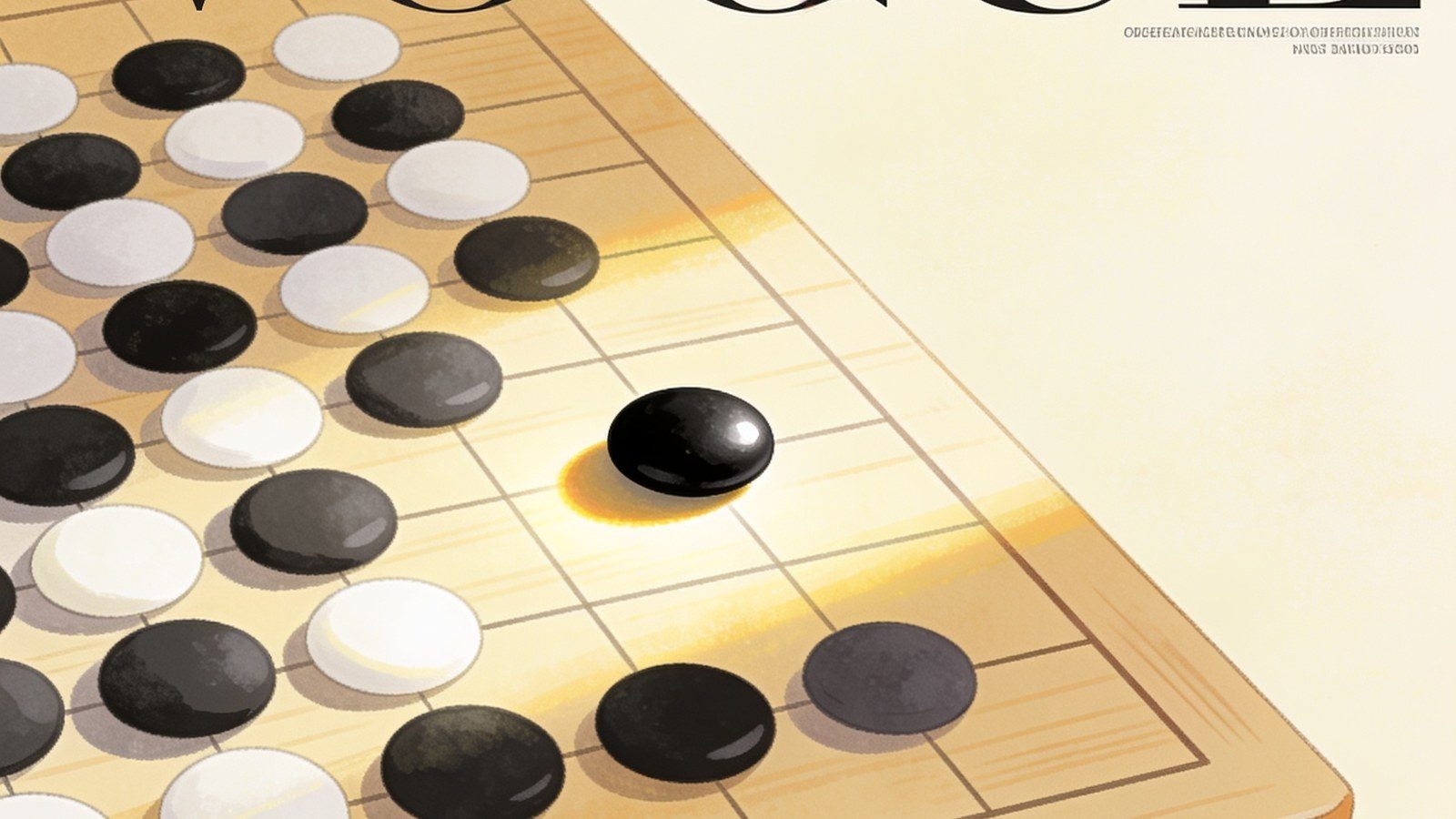
More than a decade ago, in a hotel ballroom in Seoul, a computer did something that a room full of the world's best Go players had called impossible. Between March 9 and March 15, 2016, DeepMind's AlphaGo beat Lee Sedol — winner of 18 world titles and widely considered the greatest player of his era — four games to one. It was the first time a machine had defeated a top professional at Go, a game long held up as the last fortress that brute-force computing could not capture. Around 200 million people watched it happen live.
The match, within the match
The early games were over quickly in spirit if not on the board. Lee Sedol resigned game one on March 9, then game two the next day. It was in that second game that the match produced its most famous artifact: Move 37.
Playing black, AlphaGo laid its 19th stone — move 37 — as a shoulder hit on the fifth line, a move the professional commentators first read as a blunder. No human of that strength would play it there. Lee himself froze, taking an unusually long time to respond. Many moves later, that odd stone sat exactly where AlphaGo needed it, and the game belonged to the machine. Commentators called the move creative. It was the first widely seen glimpse of a program doing something no one had taught it, and doing it better.
Lee refused to go quietly. On March 13, playing white in game four, he found a brilliant move of his own at move 78 — a sequence Korean commentators would crown "the hand of God" — and AlphaGo resigned after 180 moves. It remains the only game a human won against that version of the program. AlphaGo closed the match with a tense 280-move victory on March 15, and donated its $1 million prize to UNICEF and related charities.
Why it wasn't brute force
What made the win a true milestone was how AlphaGo played. Go's 19x19 board offers a branching factor — the number of legal moves at each turn — far beyond chess, and more possible positions than there are atoms in the observable universe. The classic game-tree search that beat Garry Kasparov at chess in 1997 (a story our sister site chess.fdhcl.com covers well) simply cannot scale there.
AlphaGo instead combined Monte Carlo tree search with two deep neural networks: a policy network, trained first on human expert games and then refined against itself, that suggested promising moves; and a value network that estimated how good a position was. Driven by reinforcement learning across hundreds of thousands of self-play games, and running on roughly 1,200 CPUs and 176 GPUs, the system no longer searched every path — it learned which paths to believe in. That combination is the real inheritance of 2016.
The stone's long shadow
The Seoul match did not end AI Go; it began a new wave. Within months AlphaGo Zero learned the game from completely random play, with no human data at all, and beat the version that had conquered Lee Sedol by a hundred games to zero. The same recipe — search, deep networks, self-play — flowed into AlphaZero and, more profoundly, into DeepMind's ambition beyond games, toward protein folding and the path to more general systems.
Move 37 is easy to remember as a lucky stone in an old board game. Its real legacy is simpler and harder: it was the first famous proof that a machine could find a strategy no human had seen, in a domain we thought we understood completely. That idea, more than any single match, is what the AI industry has been running on ever since.